" height="271.9999926478547px" id="EEb7rlRyU" width="823.9999863254119px"/><path d="M 41.234 82.42 C 64.009 82.42 82.469 63.97 82.469 41.21 C 82.469 18.451 64.009 0 41.234 0 C 18.461 0 0 18.451 0 41.21 C 0 63.97 18.461 82.42 41.234 82.42 Z" fill="rgb(20, 232, 155)" height="82.4204655951471px" id="oKwt2AI3_" transform="translate(545.508 14.698)" width="82.46885142513122px"/></g></svg>)
How to have your beef and eat it too: reducing enteric methane emissions.
At Zero Carbon, we have spent the past year thinking about one of the biggest sources of global greenhouse gas emissions: enteric methane emissions from livestock. These emissions remain unsolved as behaviour change and policy incentives have not taken off. In this article we review the scale of these emissions, the biochemistry in ruminant animals that produce them, the innovations being developed to solve them, and the drivers and barriers for these innovations. We share a market map of the startups working in this space and our take on what makes an exciting investment opportunity.
Massive emissions haven't driven behaviour change
Methane is one of the three major greenhouse gases alongside carbon dioxide and nitrous oxide. It’s classified as a ‘super pollutant’ with a much higher global warming potential than carbon dioxide: 28 CO₂e on a 10-year timescale and a potent 84 CO₂e on a 20-year timescale. Methane emissions are responsible for about 30% of the rise in global temperature since the pre-industrial era. This is an emissions problem that can’t be ignored. So, where does the methane come from?
Anthropogenic methane is produced from three main sources: livestock emissions (mostly from cattle burps and some from manure), fugitive emissions from the fossil fuel industry (gas leaks from oil & gas extraction), and waste (from the anaerobic breakdown of organic matter in solid waste and wastewater). Livestock emissions are the highest of these (by volume and per capita), and most of this comes from the world’s 1.5 billion cattle.
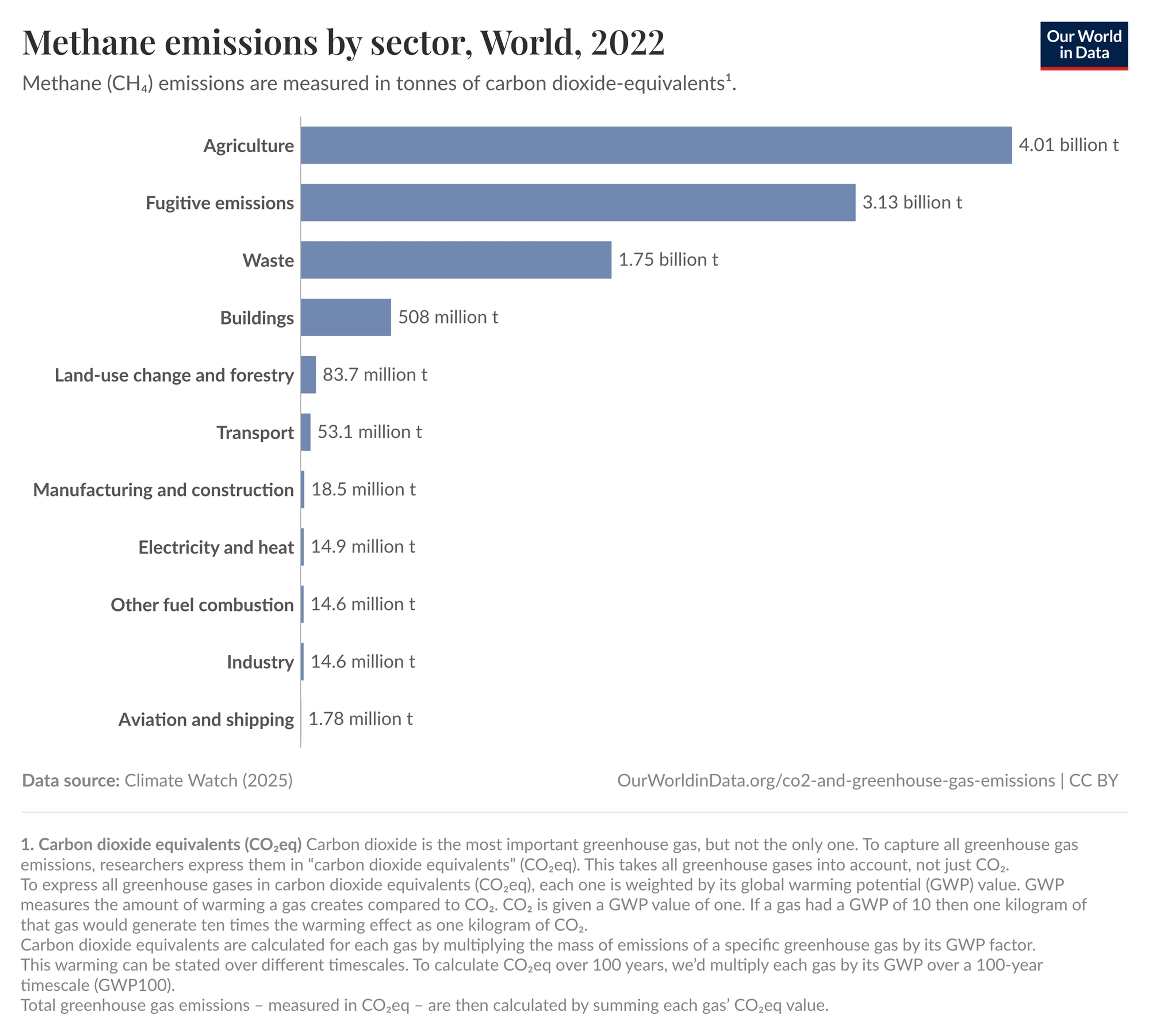
Methane emissions by sector. Source: Our World in Data
Ruminant animals, such as cattle and sheep, produce methane in their guts when they digest food. This is called enteric methane (see the science section below to learn how this works). The vast scale of industrial livestock agriculture means that enteric methane emissions have reached 5.8% of global GHG emissions—more than cement and chemicals production. It’s, for the large part, the methane emissions that give beef, lamb, and cheese their massive carbon footprint relative to other food. Once you know this, it’s hard not to think about it every time you eat meat or dairy (see how we're solving cheese emissions with our investment in Nutropy).
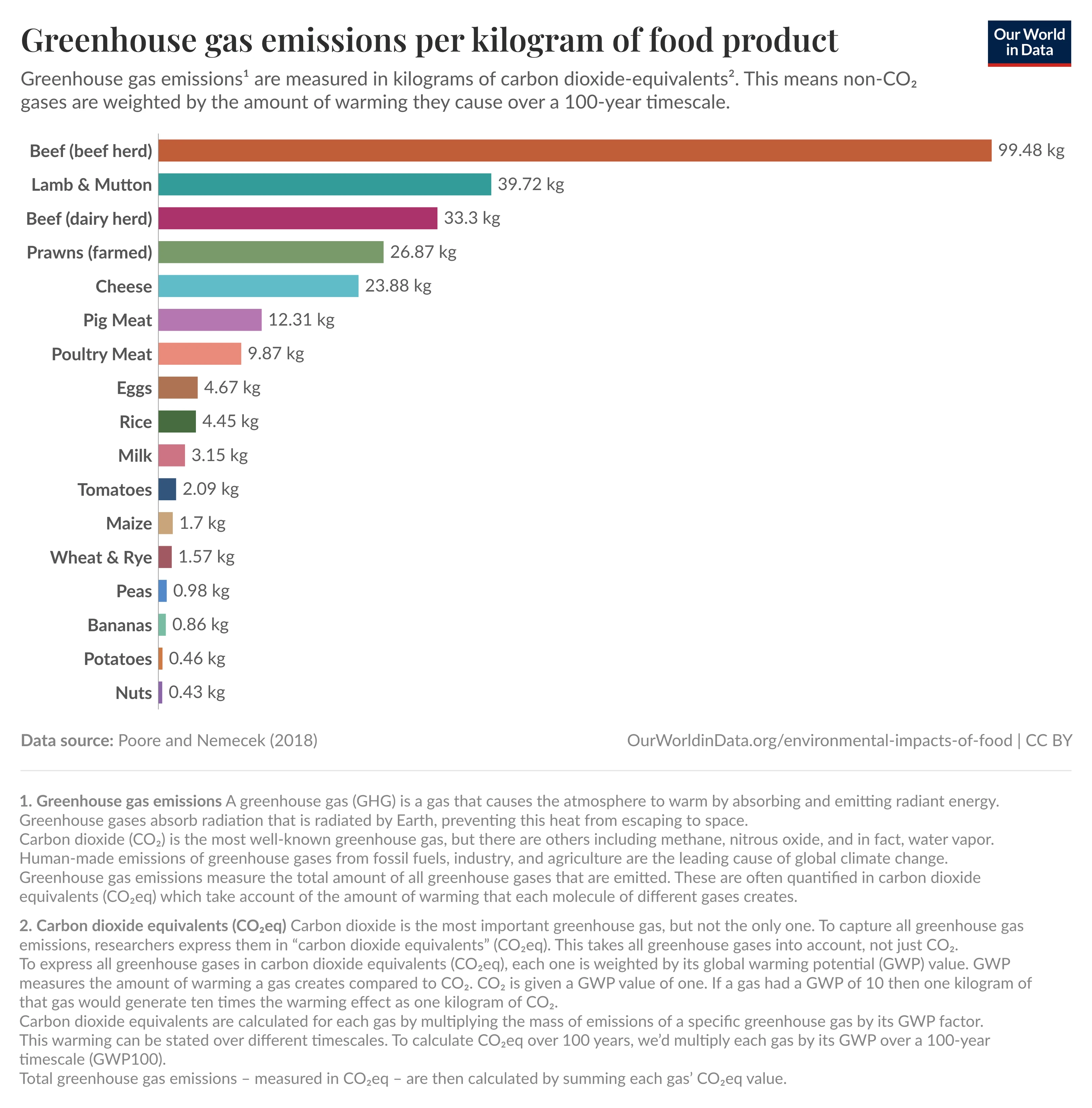
Typical emissions of different food products. Source: Science via Our World in Data
Dietary change is an option, with studies showing that moving to a vegan diet could reduce emissions by 6.6 GtCO₂e annually (that’s 12% of our global emissions). We can achieve nearly half of that reduction (2.7 GtCO₂e) just by eliminating beef and lamb, not dairy. But the reality is, plant-based diets and products haven’t taken off (only 9% of UK self-report to be vegan or vegetarian). The demand for meat keeps growing with our growing population, and despite meat-free Mondays, flexitarian diets, and a range of animal-free alternatives to our favourite foods, our per capita meat demand has continued to increase, and our per capita consumption of beef has not decreased since the 1960s.
So, is there another way? Given that the large majority of us want to keep enjoying beef burgers and lamb roasts, is there a way we can keep producing these foods but without the emissions?
Researchers have been asking this question and several categories of solutions have emerged. Before we take a look at some of these solutions, let’s first look at the science behind enteric methane and why cows burp out so much methane.
The science of cow burps
Enteric fermentation is a complex anaerobic process dependant on the symbiotic relationship between the ruminant host (the cow or sheep) and a diverse microbial ecosystem within its rumen. This ecosystem is composed of bacteria, protozoa, fungi, and, crucially, methanogenic archaea. When the cow eats grass, cellulolytic bacteria and fungi break down the complex plant material (cellulose and hemicellulose) into simpler sugars. These sugars are then fermented by a wide array of bacteria into volatile fatty acids (VFAs)—primarily acetic (CH₃COOH), propionic (CH₃CH₂COOH), and butyric (CH₃CH₂CH₂COOH)—which are absorbed by the cow as its main energy source. This fermentation also produces hydrogen (H₂) and carbon dioxide (CO₂).
There is a feedback mechanism in this system, in which the build up of hydrogen prevents further fermentation. The rate of fermentation must be controlled in this way to prevent ruminal bloat. So the removal of hydrogen is critical for fermentation to continue. This is where methanogenic archaea, also called methanogens, come in. Through methanogenesis, they use the hydrogen and carbon dioxide to produce methane, as shown in the primary chemical reaction:
CO₂ + 4H₂ → CH₄ + 2H₂O
This process efficiently removes excess hydrogen, allowing continuous fermentation and energy production for the animal. Methane, being the hydrogen sink through methanogenesis, becomes a significant by-product that is expelled from the cow primarily via burps.
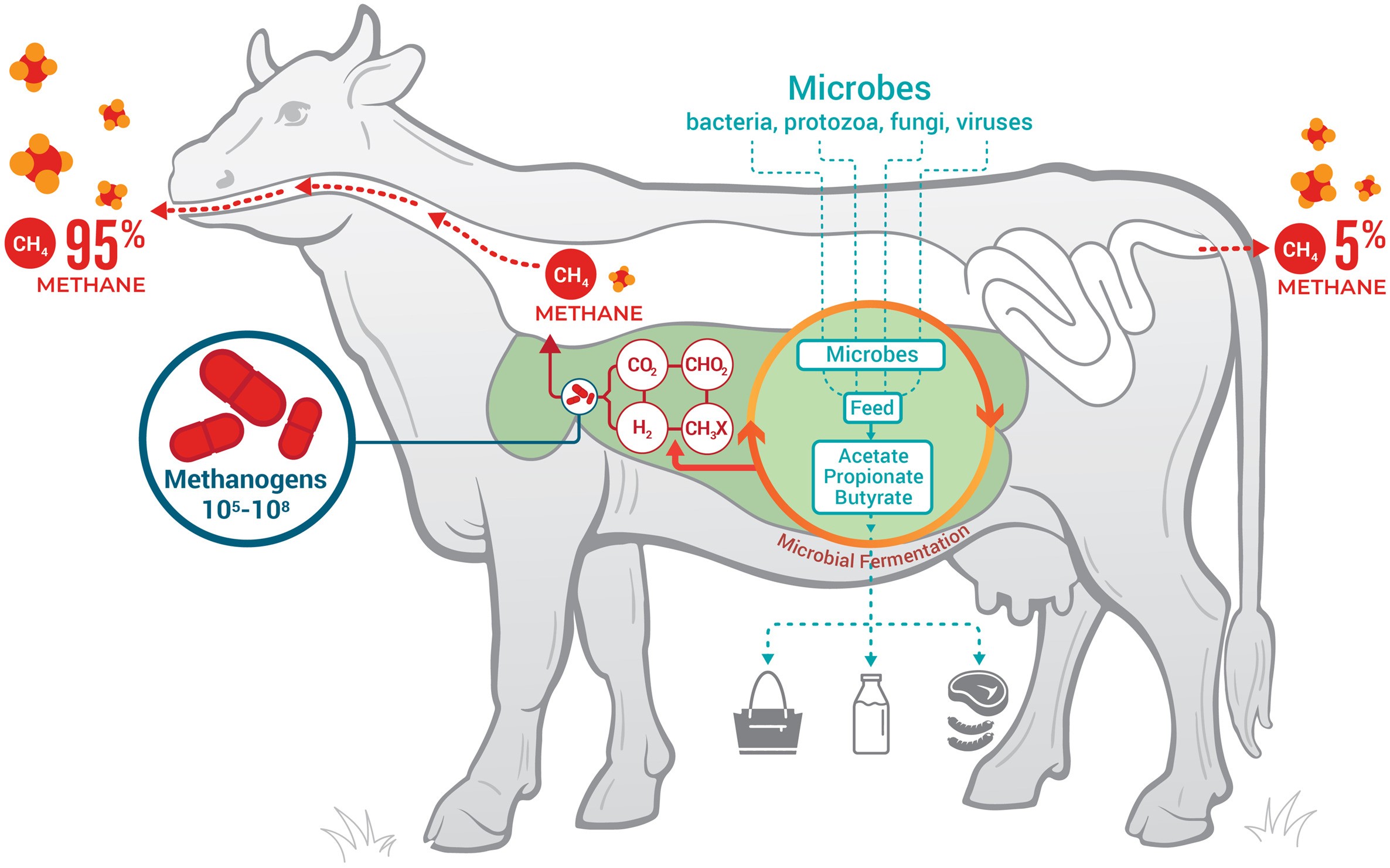
Ruminant fermentation and methanogenesis, a simplified diagram. Source: Algal Research
Reductive acetogens can also use the hydrogen and carbon dioxide produced by the digestion of plant material. The acetogens combine H₂ and CO₂ to produce acetic acid (CH₃COOH), which the animal can absorb and use for energy. But the methanogens are the dominant consumers of the hydrogen—they outcompete the other microbes due to their much higher affinity for hydrogen.
Methanogenesis is a natural and important part of rumen digestion, so innovators need to think about how to reduce the methane emissions without negatively affecting the animal or the farmer’s produce.
Solutions to enteric methane emissions
Thankfully, there are a wide range of potential solutions to reduce enteric methane emissions, which can be grouped as follows:
Dietary modification: Optimising livestock feed composition to favour metabolic reactions with lower methane production. These changes can be implemented immediately and typically reduce emissions by around 10%.
Breeding and genetics: Selective breeding to identify and select for cattle that naturally produce less methane (Companies: Semex; CRV). While promising, more progress is needed to untangle the complex genetic factors involved.
Methane capture: Mechanical solutions using devices attached to barns or the animals (Companies: Ambient Carbon; Zelp; Sixteen44). Barn capture is limited to the 10% of livestock emissions that are from indoor cattle, while wearable devices still face implementation challenges.
Vaccines: Antibody-driven inhibition of methanogens in the rumen (Companies: ArkeaBio; Pasture Biosciences; Lucidome Bio). Vaccines are ideal for grazing animals because they offer a low-cost, infrequent treatment. Most players are currently in the scientific research stage, but we are watching this promising space closely.
Feed additives: Products fed to livestock in addition their nutritional requirements that directly inhibit methanogenesis or modify the rumen microbiome to reduce methane emissions. This is the most advanced innovation category, and we believe it currently represents the most active in startup innovation. For this reason, the rest of this article will focus on the existing products and emerging solutions in this category. We have divided feed additives according to their source and the way they are produced:
Seaweed-based: Seaweed and seaweed extracts, including bromoform, the active compound in seaweed that causes methane inhibition. (Companies: CH4 Global, Volta Greentech)
Synthetic chemical: Chemical compounds selected and designed for methane inhibition and produced synthetically. (Companies: Rumin8, AgTeria Biotech)
Plant-based: Plants or plant extracts and essential oils that have methane reducing properties. (Companies: Mootral; AllTech)
Microbials: Non-GMO microorganisms and probiotics that modify the rumen microbiome to favour non-methane producing pathways. (Companies: Locus Animal Nutrition; Biomedit)
Synbio: Products produced using biotech, such as enzymes, genetically engineered plants and genetically-engineered microbes. (Companies: Number 8 Bio; Elysia Bio)
The market map below shows companies working on enteric methane solutions, including the feed additive sub-categories. Instead of reviewing these comprehensively, this article will tell the story of methane inhibiting feed additives, from the first major sub-category (seaweed-based) and the most commercially established products (Bovaer and SilvAir), to the emerging innovations that are solving the problems of the earlier products.
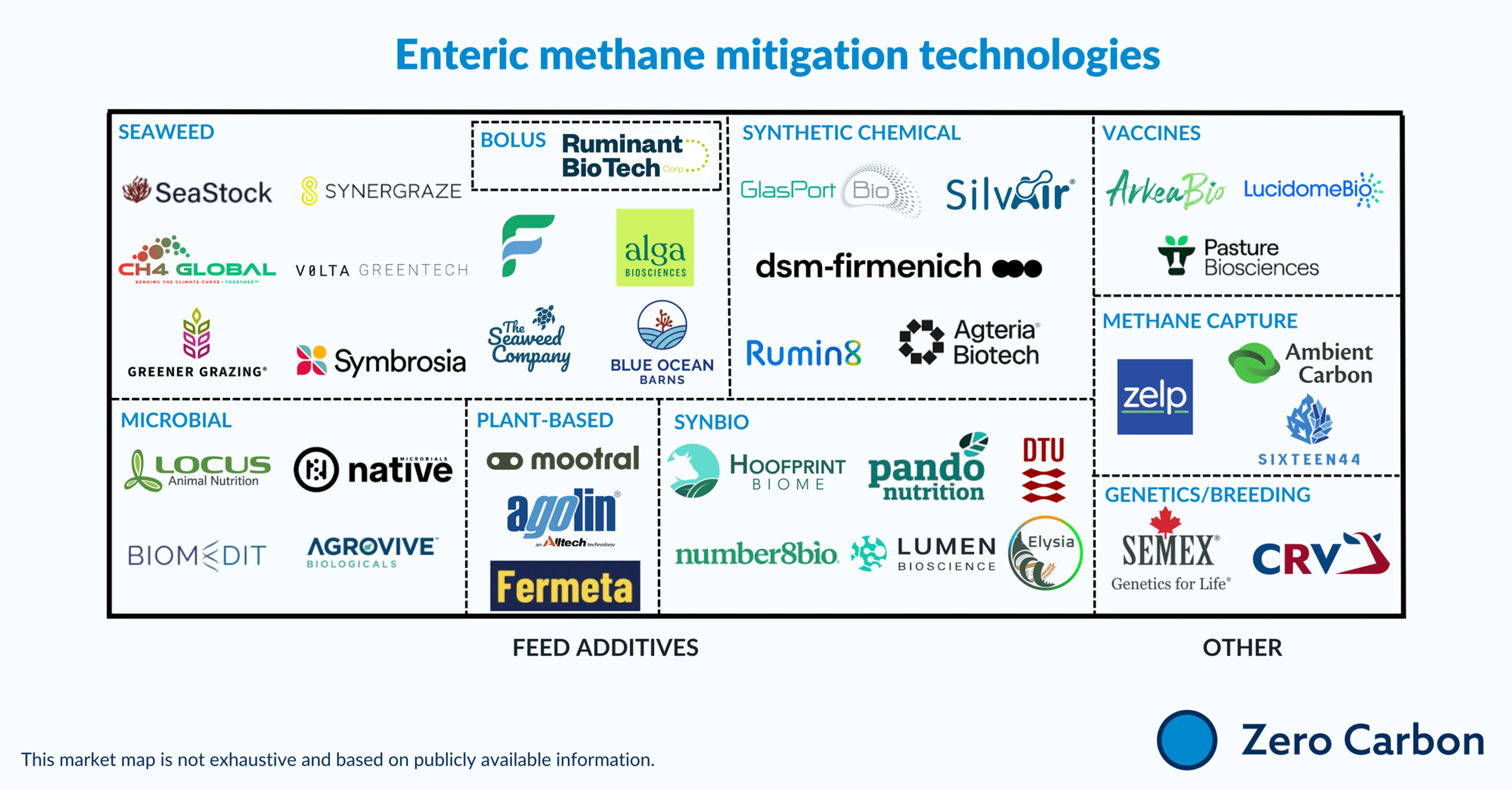
Zero Carbon's market map of enteric methane interventions based on the categorisation described above. Note that categorisations are based on publicly available information, and that the list of companies is not exhaustive.
Seaweed & bromoform
The first major feed additive used for enteric methane reduction was the red seaweed, Asparagopsis taxiformis, which contains the active compound, bromoform. Bromoform acts as a structural mimic of methane, directly binding to and inhibiting the final enzyme (methyl-coenzyme M reductase, MCR) in the methanogenesis process, effectively blocking methane production.
Lab studies and initial trials showed remarkable efficacy, sometimes reaching 80% to 90% methane reduction. However, this efficacy can hit a natural ceiling in field trials due to a yield trade-off. When methanogenesis is blocked, the resulting buildup of hydrogen signals to the cow that its rumen is full. This leads to a drop in Dry Matter Intake (DMI)—the cow stops eating—which, in turn, negatively affects milk and meat yield.
Even if the dose is optimised to balance methane reduction with yield, the high cost of producing seaweed via aquaculture presents a significant economic hurdle. Companies like Rumin8 are addressing this by manufacturing bromoform synthetically. Using established and highly scalable chemical processes, they can create the active ingredient at a potentially much lower cost than seaweed farming.
A final, major barrier remains in regulatory approval. Despite the marketing advantage of being a 'naturally derived' additive, there are concerns over bromoform’s carcinogenic and ozone-depleting properties, and regulatory approval is pending.
Bovaer & SilvAir
The most successful enteric methane inhibitors to date are DSM-Firmenich’s Bovaer, and Cargill’s SilvAir. These are chemically-synthesised compounds that have obtained regulatory approval and are commercially available.
SilvAir, approved in the EU, UK, and Brazil, has seen less widespread adoption and Cargill reports up to a 10% reduction in methane. It is composed of nitrate & calcium. Its mechanism is to use the nitrate to produce ammonia in the rumen, which consumes hydrogen and leaves less available for methanogens to convert into methane.
Bovaer is the most commercially successful methane inhibitor to date. It’s active ingredient is 3-nitrooxypropanol (3-NOP). Like bromoform, it inhibits methanogenesis by blocking the MRC enzyme involved in the final, methane-producing step. However, in contrast to bromoform which competes for the substrate, 3-NOP specifically targets and directly inhibits the enzyme.
Bovaer is approved in over 60 countries and reliably reduces methane by an average of 30% in dairy cows and 36% in beef cattle. Despite its safety being proven through rigorous regulatory processes globally, consumer concerns over chemical additives in food products remain a significant adoption barrier.
Emerging solutions for pasture-based herds
The methane inhibitors discussed so far need to be fed daily as part of a total mixed ration, which limits them to feedlots and dairy operations. This is a significant drawback given that 90% of the enteric methane is produced from animals outdoors on pasture.
To address the pasture problem, companies like Ruminant BioTech are developing a slow-release device called a bolus, that remains in the cow’s stomach for up to 6 months. Boluses are not new — they're commonly used for long-term delivery of trace minerals and antiparasitic treatments. A bolus containing a methane inhibitor is crucial for enabling effective, infrequent methane inhibition for pasture-based herds.
Emerging solutions to improve economics for farmers
A critical barrier to almost all feed additives is the cost to the farmer. For an industry operating on razor-thin margins, a product that increases feed costs (like Bovaer, at around $0.5 per cow per day) and offers no direct economic benefit, is often a non-starter. This challenge is magnified if their is a risk of yield loss, which is an unacceptable trade-off for farmers.
This is where next generation startups come in. Companies like Fermeta, Hoofprint Biome and Number8 Bio are developing solutions designed to provide a financial benefit to the farmer in addition to emissions reduction. Fermeta, for instance, aims for a lower-cost feed that reduces methane, while Hoofprint and Number8 are focused on achieving increases in meat and milk yield alongside methane reduction. This co-benefit approach is where we see the most exciting potential for investable solutions.
Rumen adaptation and long term in vivo trials
In all cases, long term field trials are required to prove that the methane reduction sustains over time. In some cases, the rumen will adapt to the feed additive with a reduction in effect beyond the typical 90 day trial. A sustained effect is critical for a viable enteric methane inhibitor.
The business case: drivers and barriers to adoption
As with all climate tech sectors, it’s important to explore the business case for enteric methane inhibitors. Are there investment opportunities in this sector? What needs to be in place for these to succeed?
Policy drivers
Policy is one of the drivers for the enteric methane inhibitor market, but is currently limited and cannot be relied on alone. The Global Methane Pledge (voluntary commitment by over 150 countries) sets a collective target to reduce global methane emissions by at least 30% by 2030. This commitment is driving national governments to support methane reduction, for example:
Denmark: Implementing the world's first tax on livestock emissions (effective 2030), requiring farms to pay $40 per ton of CO₂e from cattle and pigs. Revenue is reinvested in agricultural climate technologies.
Belgium: Provides subsidies for farmers who use approved enteric methane inhibitors, including 3-NOP.
New Zealand: Their Methane Emissions Reduction Action Plan invests in R&D for low-methane breeding and vaccines.
Australia: The MERiL program funds feed supplement development, and the Emissions Reduction Fund allows farmers to earn sellable carbon credits for reducing emissions.
United States: Proposed legislation (EMIT LESS Act) aims to provide financial and technical assistance for voluntary adoption of methane-reducing technologies. California runs a state-level grant program (LEMER-RP) for methane inhibitors.
Canada: Developing a Greenhouse Gas Offset Credit System (REME Protocol) to financially reward beef cattle farmers who reduce emissions. And the Agricultural Methane Reduction Challenge funds the development of innovative new technologies.
Policies that incentivise farmers through carbon credits, taxes, or financial rewards can be strong drivers for implementing methane reduction solutions, but are currently limited in scope and not widespread globally, with a handful of countries taking the lead.
Corporate demand
Despite the limited policy drivers, food and dairy corporates are driving adoption of methane inhibitors through partnerships and financial programs.
Corporate actions include:
Danone, Starbucks, Bel Groupe, KraftHeinz, Lactalis, and others are part of the Dairy Methane Action Alliance, committed to reducing methane emissions across the dairy supply chain.
Food giants Mars and Nestle have partnered with the New Zealand dairy cooperative, Fonterra, to fund diary methane reduction. Half of the funds will pay for optimisation tools that farmers can use to improve efficiencies, and the other half will be paid to farmers as rewards to reducing their methane emissions.
Arla, Bel Groupe and Danone are incentivising their dairy farm suppliers to use Bovaer to reduce methane emissions. Arla has partnered with Tesco, Morrisons and Aldi to subsidise the cost of Bovaer to farmers involved in a trial program. Bel have committed to paying a premium (an additional €10 per 1,000 litres of milk) to farms that voluntarily incorporate Bovaer into their cattle's diet. Danone also helps farmers pay to use Bovaer in geographies where it has been approved.
These are positive market signals. But why are these corporates investing in methane reduction when they are not forced by policy? They are driven by their own net zero commitments and Scope 3 emissions targets, which are enforced by modern consumers' and investors' increasing demands for transparency and sustainability from the brands they support. By voluntarily investing in solutions now, companies can get ahead of potential mandates, influence policy, and make the transition smoother for their farmer partners, avoiding abrupt and costly changes later. They are acting strategically to future-proof their supply chains, get ahead of potential future regulation, and protect their brand reputation.
Low margins cause cost and risk barriers
The current financial support from corporates, although promising, only just covers, or partially covers, the cost of the methane inhibitors. Without sufficient financial support or incentives, buying methane inhibitors could hurt farmers' profits in an already thin-margin industry.
Additionally, the agriculture industry's thin margins gives them little leeway to take risks on new products. Farmers are sensitive to losing yield or losing consumers if they implement a new product or technology. It’s critical that they feel confident about a product before they use it, with a high bar for proof through animal trials. The risk needs to be low, and the reward needs to be proven, for a product to succeed.
Regulatory approval as a barrier
Regulatory approval is another major barrier to methane inhibitors as an investment case as it dictates the timeline for commercial success, and the process is long and complex:
Field trials require at least three trials in distinct regions, typically taking 2 to 5 years to complete.
A comprehensive dossier submission detailing characteristics, trial data, and evidence of safety (to animals, humans, and the environment) is submitted to agencies like EFSA (Europe), U.S. FDA, MAPA (Brazil), and MPI (New Zealand).
The review process can take between 18 months and 5 years, often requiring additional data or trials.
Companies developing methane inhibitors must be well-informed on the standards in key markets and have a realistic plan for commercialising their product alongside the approval process.
So, what is our bet?
At Zero Carbon, we have spent the past year reviewing the enteric methane inhibitors space. Given the opportunities, barriers, existing and upcoming solutions, and scientific constraints in methane inhibition that have been discussed in this article, we think that a competitive product should include the following:
Provide an incentive to farmers beyond methane reduction credits e.g. increases in milk or meat yield
Have a strong narrative for consumer acceptance
Have formulations that work for both pasture-fed and feedlot animals
Have a methane reduction potential of at least 30%
Have strong potential for long term sustained methane reduction
Be simple and fast to manufacture at scale
Have a clear and rapid path to regulatory approval
If you would like to continue the conversation, or have a technology solving enteric methane emissions, please get in touch!
Contact: sarah@zerocarbon.capital
References & recommended reading
https://ourworldindata.org/emissions-by-sector
https://ourworldindata.org/environmental-impacts-of-food
https://ourworldindata.org/carbon-opportunity-costs-food
https://ourworldindata.org/meat-production
https://ourworldindata.org/vegetarian-vegan
Management of enteric methane emissions in ruminants using feed additives: a review, V. Palangi and M Lackner Animals (2022)
The potential use of bromoform as a methane mitigiation technology in New Zealand farm systems, NZAGRC (2024)
https://www.sparkclimate.org/enteric/home
https://www.cargill.com/animal-nutrition/products/silvair
https://www.dsm-firmenich.com/anh/products-and-services/products/methane-inhibitors/bovaer.html
https://www.globalmethanepledge.org/
https://business.edf.org/dairy-methane-action-alliance/
Acknowledgements
I am grateful to all the experts and founders who shared their time and insights with me on this topic. Any errors in the text are of course mine. Thank you to Charles Brookes (Spark Climate), Annie Williams (Arla, formerly UK Agri-Tech Centre), Elizabeth Lewis (Nutrasteward), Lorcan Bannon (Tirlan), Neil Rowe (Rowe Associates), and Frédéric Garidou (Groupe Bel).