" height="271.9999926478547px" id="EEb7rlRyU" width="823.9999863254119px"/><path d="M 41.234 82.42 C 64.009 82.42 82.469 63.97 82.469 41.21 C 82.469 18.451 64.009 0 41.234 0 C 18.461 0 0 18.451 0 41.21 C 0 63.97 18.461 82.42 41.234 82.42 Z" fill="rgb(20, 232, 155)" height="82.4204655951471px" id="oKwt2AI3_" transform="translate(545.508 14.698)" width="82.46885142513122px"/></g></svg>)
Losing steam, gaining power: ZCC backs Nuclear Turbines to make small nuclear genuinely cheap
3 mins
We're delighted to announce our investment in Nuclear Turbines, which has raised £15m to build a compact nuclear power system designed around a gas turbine instead of a steam plant. The round was led by IQ Capital, alongside Rhapsody Venture Partners, ourselves and Empirical Ventures - who span the company out of BAE Systems as part of their venture-building programme.
Electricity generation is the largest-emitting sector on the planet, at around 13.9 Gt CO₂ in 2024. It is also, in the UK, ruinously expensive: British businesses pay around 50% more for power than their French and German counterparts, and roughly four times US prices. Firm, clean, cheap electricity would fix a climate problem and an industrial one at the same time. Nuclear has been the obvious candidate for that job for sixty years - but it has never been cheap.
Haven’t small modular reactors solved this?
The industry has been moving toward Small Modular Reactors (SMRs) for the last few years. It’s the right instinct and a genuine step forward. Taking a plant off a bespoke ten-year construction site and into factory production by shrinking the footprint and standardising the design: that is how costs come down in every kind of manufacturing, and we’re big fans.
The catch is that the reactor is only part of the big, challenging build. The rest is the plant around it: boilers, tanks, heat exchangers and cooling systems, all engineered to extract heat by handling high-pressure water safely. That “steam island” has scale economies of its own, and they don't care how neat the reactor in the middle has become. Shrink the reactor and keep the steam plant, and you can shed economies of scale faster than you shed cost. As Jeremy Owston, Nuclear Turbines' co-founder, puts it, "People often assume that making reactors smaller automatically makes them cheaper."
These reactors use steam because water-cooled reactors run below 300°C, and at those temperatures steam is what you've got to work with. So the question isn't how to build a smaller reactor. It's what you would have to change to stop needing the steam plant at all.
Enter the gas turbine
Gas turbines are the cheapest, most efficient way humans have found to turn heat into electricity. They're compact, they're mass-manufactured for aviation and gas-fired power, and unlike a steam island they stay economic at small scale. Bolting one onto a reactor is an obvious idea, and it has stayed obvious and undone for decades, because of a materials problem.
A gas turbine needs very hot air. Water-cooled reactors can't get anywhere near those temperatures. Reactors that can, the high-temperature designs, are typically built around graphite, and graphite burns when you expose it to air. So the reactor that runs hot enough to drive a gas turbine is precisely the reactor you cannot let air near.
Nuclear Turbines' reactor architecture does away with the graphite. Air from the turbine's compressor is heated directly in the reactor and returned to the turbine hot. That single change is the key unlock: it lets a nuclear plant use power-conversion equipment that already exists and is already cheap, and it removes the steam infrastructure that has kept nuclear stubbornly large.
We like the discipline of it. One genuine novelty, in the reactor and its fuel, and everything downstream bought off a shelf. That is a much better risk profile than a company inventing in six directions at once.
What’s the upshot?
The company's modelling points to electricity at one fifth the cost of today's new nuclear plants (which even beats some renewables). Putting the equipment behind the meter, as a truly modular design enables, gives even bigger savings.
A fundamentally clean, cheap source of firm power will drive decarbonisation and industrial competitiveness: two key goals for the UK - and the world! For a fund with a half-gigaton impact threshold, the arithmetic here is unusually simple: abating 0.5 Gt CO₂e a year means displacing under 4% of today's power sector emissions. Cheap, firm, clean electricity is one of the very few things that could plausibly do that, and cost, not physics, has been the thing standing in the way.
Why Nuclear Turbines?
As ever, our investments are as much about the people as they are the tech. The team at NT is perfectly positioned to execute on this bold new approach.
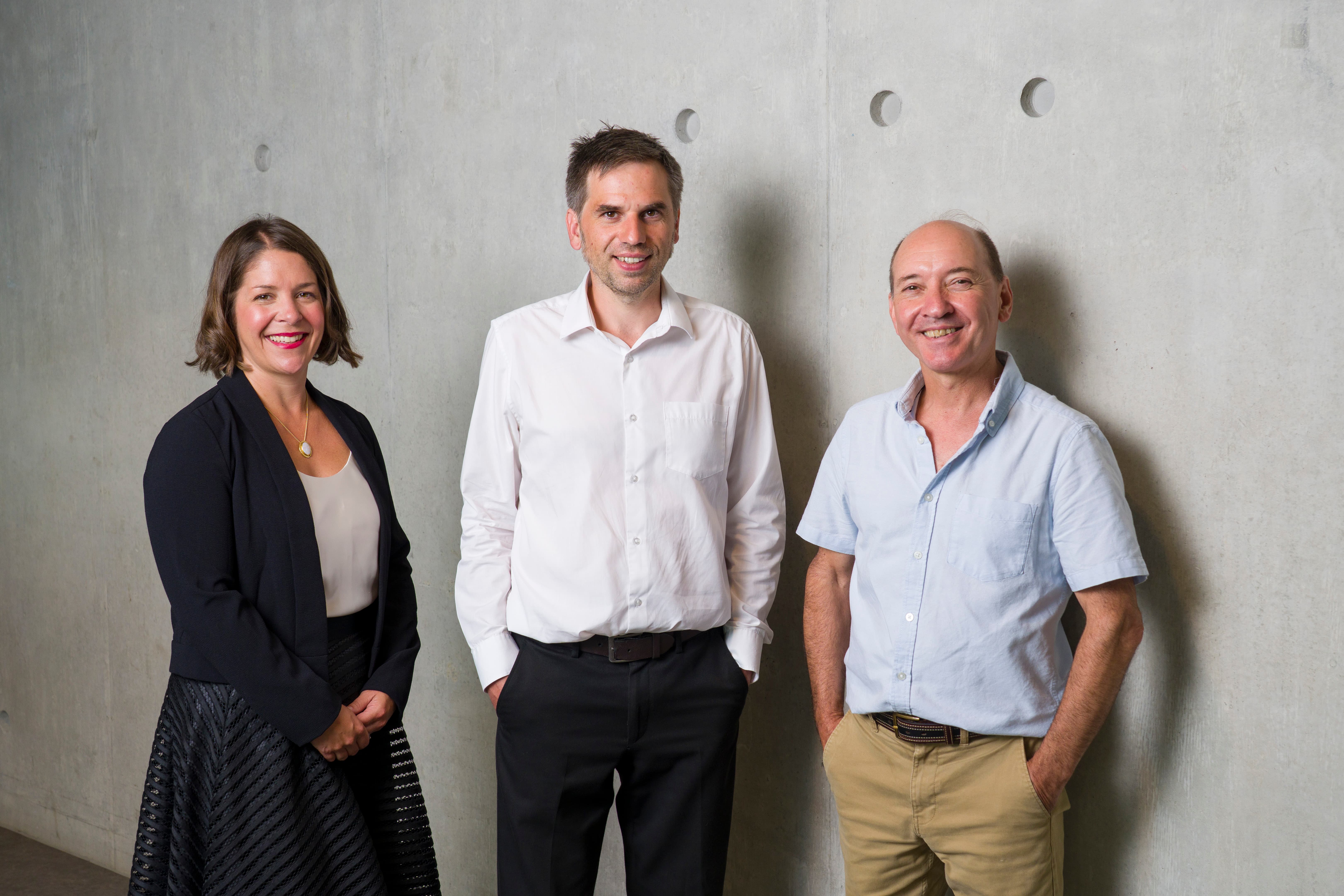
Jeremy Owston spent more than a decade at BAE Systems working on nuclear systems, and much of it on one narrow question: how do you get heat out of a reactor and into useful power when the whole thing has to fit inside a very confined space? That is a problem that makes you think about simplicity constantly. About seven years ago he started a PhD at the University of Manchester to chase it properly, which is where he met Professor Tim Abram.
Tim holds the Westinghouse Chair in Nuclear Fuel Technology at Manchester and has spent over twenty years on reactor and fuel design at Westinghouse and the National Nuclear Laboratory. He knows what fuel can be made to do. Jeremy knows what a turbine needs. A turbomachinery engineer asking a fuel scientist what's possible is how you get a reactor designed backwards from the turbine, and it isn't a conversation that tends to happen inside a conventional reactor programme. It certainly isn't one that happens on a whiteboard in an afternoon; this started as a doctoral side-question and took many years to become a company.
Of course, they're not doing it alone. Lauren Dickerson has joined as Chief Commercial and Strategy Officer from Centrica, where she was Strategy Director. The team understands that this is about much more than pure engineering and Lauren’s industry knowledge is key to getting the business right, alongside the science.
Nuclear Turbines is hiring across engineering and operations. If you want to work on making nuclear power cheap, they would like to hear from you.
Welcome, Nuclear Turbines. We're excited to be part of your journey.